
MADISON – On behalf of Black Leaders Organizing for Communities (BLOC), a project of Beyond Impact, the American Civil Liberties Union (ACLU) of Wisconsin filed a friend-of-the-court brief with the Wisconsin Supreme Court in support of a case seeking to overturn court rulings that the odor of cannabis alone can establish probable cause for a police search.
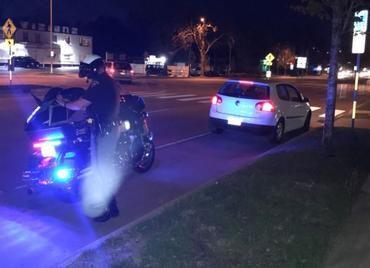
In 2023, the Wisconsin Supreme Court ruled that police have a right to search a person after a traffic stop if they believe the vehicle smells like cannabis, reversing a lower court’s decision that the odor of marijuana cannot be the sole basis on which a search is conducted.
Under the law, police need “probable cause” to search a person’s clothes or body. They must have concrete evidence that leads them to believe the person is probably engaged in some sort of criminal activity. Conducting a search without probable cause is illegal.
A recent criminal case involving these issues again raises a question about the logic behind the decisions in Moore and Secrist, a pair of cases which established the precedent that cannabis smell can be grounds for probable cause.
The brief asserts that permitting warrantless searches based exclusively on odor violates the Fourth Amendment by relying on subjective, unverifiable sensory claims, and that circumstances have changed since those rulings that make the Court’s previous logic no longer relevant and applicable.
There are many derivatives of cannabis, some of which are legal to possess under Wisconsin law. Cannabis can smell identical to other legal substances, so it’s impossible to determine with any meaningful certainty whether cannabis is actually present in a vehicle or on a person solely on the basis of odor. An officer, using scent as their only guide, cannot possibly differentiate clearly between cannabis and other legal hemp-based products, since they smell exactly the same.
Another argument made in the brief is that allowing officers to stop or search individuals solely based on odor exacerbates racial disparities and encourages pretextual stops. Subjective smells cannot be corroborated through body camera footage or other documentation, leaving courts to rely entirely on an officer’s subjective opinion about a particular “smell.”
In Wisconsin, Black people are more than five times as likely to be arrested for cannabis possession than white people, despite comparable usage rates. Black individuals are also more likely to be stopped and subject to police search.
Allowing police to stop and search individuals based purely on sensory claims that can’t be substantiated through other means of evidence creates conditions for even more biased policing.
“We believe the Court made an error in establishing that cannabis odor alone can justify a warrantless search of a person or their vehicle, ” said ACLU of Wisconsin Legal Director ACLU of Wisconsin. “Probable cause must be based on objective and concrete evidence. Simply relying on an officer’s belief that they smelled illegal cannabis – which is indistinguishable from other perfectly legal hemp products and impossible to independently verify – could lead to unlawful stops and searches or even false arrests. Moreover, knowing that even substances illegal in Wisconsin are perfectly legal in neighboring states of Illinois, Michigan, and Minnesota, and that the odor of those legally-consumed products can linger, is further reason why the Court’s prior rulings on this issue no longer track the status of the law and should be overturned.”
Related Issues
Related Content

As Push For Legalization Continues, We Cannot Lose Sight Of Those Most Affected By Cannabis Prohibition

Clemency Must Be at the Forefront of Our Fight to Legalize Cannabis

Stay Informed
Sign up to be the first to hear about how to take action.
By completing this form, I agree to receive occasional emails per the terms of the ACLU’s privacy statement.
By completing this form, I agree to receive occasional emails per the terms of the ACLU’s privacy statement.