
In September 2025, the Trump Administration released National Security Presidential Memorandum 7 (NSPM-7), claiming that people with “radical” views on gender and “un-American” views on the family could pose threats to national security. Earlier that year, the Department of Homeland Security removed internal protections that had limited surveillance or intelligence activities based solely on someone’s sexual orientation or gender identity.
Combined with the recent rise in anti-LGBTQ+ legislation across the country, especially targeting trans people, these developments have created real fear within queer communities. But it is important to understand something: we have been here before.
The 1950s and 1960s were far more hostile to queer existence than the present moment. LGBTQ+ people faced widespread criminalization, job discrimination, social stigma, police violence, and government surveillance at levels modern America has not seen in decades. Yet queer people survived that era. Understanding how the government targeted queer communities then is critical for understanding the risks posed by modern surveillance powers today.
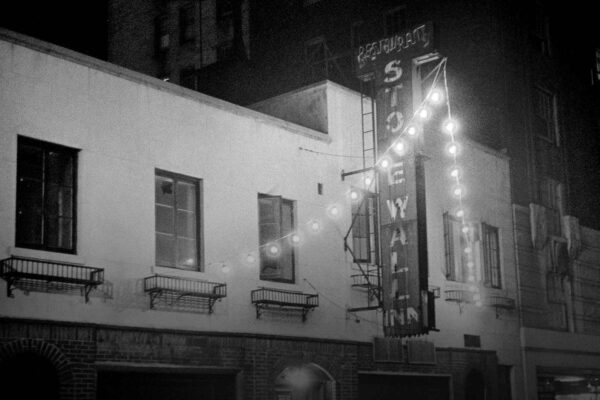
In the last piece of this series, we discussed how queer nightlife became one of the only public places where LGBTQ+ people could safely gather and exist openly. But because queer nightlife centralized queer community into identifiable spaces, those same bars and clubs became primary targets for law enforcement surveillance, infiltration, and harassment.
The federal government’s anti-LGBTQ+ crackdown escalated during the “Lavender Scare” of the 1950s. Mirroring the anti-communist hysteria of the Red Scare, thousands of LGBTQ+ federal employees were investigated, blacklisted, and fired under the claim that queer people were vulnerable to blackmail and therefore threats to national security. In 1953, President Dwight D. Eisenhower signed Executive Order 10450, effectively barring gay people from federal employment.
At the same time, queer people were increasingly portrayed as morally unstable, “anti-American,” and susceptible to dangerous political ideologies. That fear helped justify expanded surveillance and policing of LGBTQ+ communities by federal and local law enforcement agencies.
The FBI under J. Edgar Hoover worked alongside local police departments to monitor LGBTQ+ people, along with Civil Rights activists, labor organizers, academics, and anti-war protesters (COINTELPRO). These operations relied on handwritten notes, informants, physical surveillance, undercover officers, and filing cabinets filled with names and accusations. Despite how primitive those tools were compared to modern technology, they still caused devastating harm to queer communities.
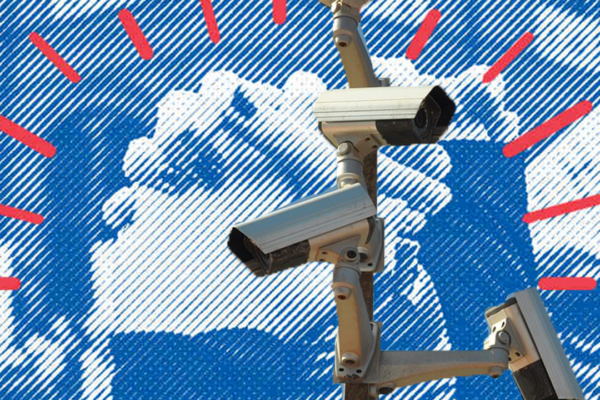
Someone who was 20 years old in 1960 is only around 86 today. This history is not ancient. Many LGBTQ+ elders alive today personally experienced police raids, federal investigations, outing campaigns, and state-sponsored harassment. That reality should force us to think seriously about the dangers of modern surveillance technologies. If law enforcement agencies were able to terrorize queer communities using little more than manpower, paper files, and undercover officers, imagine the damage possible today through facial recognition, cellphone tracking, social media monitoring, and AI-driven surveillance systems.
Queer nightlife became one of the primary focal points of law enforcement targeting because gay bars were far more than bars. For many LGBTQ+ people, they functioned as community centers, dating spaces, support networks, and some of the only places where queer people could exist openly around one another.
To surveil queer nightlife was not simply to monitor entertainment. It was to monitor the infrastructure of queer life itself.
Police used liquor laws and morality codes to justify constant harassment of queer spaces. If a venue had a liquor license, it risked losing it for allowing same-sex dancing or queer affection. If it operated without a license while serving alcohol, police targeted it that way instead. Either scenario left queer nightlife vulnerable to abuse.
Police raids became routine across the country. Officers stormed bars, lined patrons against walls, demanded identification, photographed attendees, and arrested people in order to publicly expose and humiliate them. Undercover officers entered bars pretending to be patrons, sometimes flirting with queer people until someone made physical contact or made an advance that could then be used as grounds for arrest.
Vice squads also parked outside gay bars photographing license plates in order to identify patrons, especially government employees vulnerable to losing their jobs during the Lavender Scare. Law enforcement even blackmailed some LGBTQ+ people into becoming informants against others within the community.
This happened in Wisconsin too.
During the tenure of Milwaukee Police Chief Harold Breier, gay bars and bathhouses faced repeated raids, surveillance operations, and coordinated harassment by local and federal law enforcement. Venues connected to Milwaukee queer nightlife, including spaces associated with the Factory Bar and the Broadway Health Club, became frequent targets. These raids often appeared designed less for public safety and more for intimidation and humiliation.
In Madison, university officials and local police closely monitored suspected queer gatherings and social spaces. Raids and investigations could result in arrests, expulsions, job loss, public outing, and the destruction of someone’s personal life almost overnight.
The goal of this surveillance was not simply enforcing laws. It was creating fear. Law enforcement wanted LGBTQ+ people to understand that even the few places where they felt safe could be infiltrated, documented, and targeted at any moment.
But history also shows something else.
Despite overwhelming state surveillance and social hostility, queer communities survived. More than that, they endured long enough to fundamentally reshape American culture. Today, there are more openly LGBTQ+ people in the United States than at any other point in history. Public support for LGBTQ+ rights is significantly higher than it was in the 1950s, the 1990s, or even the early 2000s. There are legal protections, advocacy organizations, and community networks that earlier generations did not have.
None of that means the current political moment is not dangerous. It is. But queer history reminds us that LGBTQ+ communities have survived periods of far more intense state targeting before.
If queer communities could survive those odds then, we can survive them now. In the next piece we will talk about the ways that LGBTQ+ communities fought back.