Modern Pride celebrations often obscure a central reality of LGBTQ+ history: the modern queer rights movement emerged directly from state repression and police violence centered around queer nightlife.
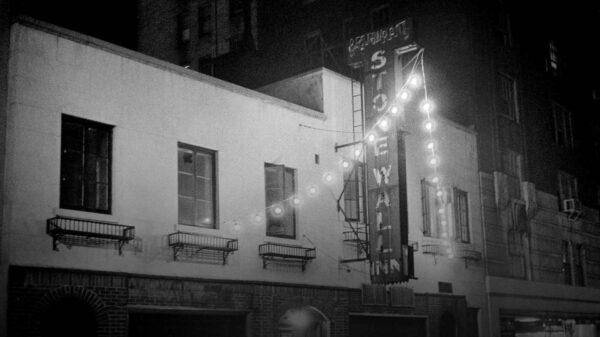
Most people know the story of the Stonewall riots. On June 28, 1969, the New York City Police Department raided the Stonewall Inn, a gay bar in New York City. But unlike countless raids before it, this time the patrons fought back, led by genderqueer sex workers Marsha P. Johnson & Sylvia Rivera. What followed was a multi-night uprising against police harassment that helped catapult the modern LGBTQ+ rights movement not just across America, but around the world.
But have you ever stopped and asked: why did this happen in a bar?
The answer is simple. For much of American history, a gay bar was one of the only places queer people could exist publicly around one another. Due to decades of exclusion from broader society, nightlife became the center of queer social life, political consciousness, and eventually, resistance. Stonewall did not happen in a bar by coincidence. It happened there because a bar was one of the only places it could happen. Check out parts 1 and 2 of the series to read more on what led to this.
And Stonewall was not the first.
Long before Stonewall, queer nightlife had already become a flashpoint for resistance across the country. The Cooper Do-nuts Riot in Los Angeles in 1959 began after police attempted to arrest gender-nonconforming patrons at a late-night diner popular with the local queer community. The Black Nite Brawl happened right here in Milwaukee after four servicemen entered a gay bar to harass patrons and were met with resistance from the community inside. The Compton’s Cafeteria Riot in San Francisco erupted in 1966 after police targeted trans women and drag queens. Then came the Black Cat Tavern protests in Los Angeles in 1967, and countless smaller confrontations across the country.
The cities, communities, and bars differed. But the pattern stayed the same: law enforcement targeted queer people in the only spaces where they could exist openly, and eventually, queer people fought back.
Police repression transformed isolated queer individuals into a self-aware community with shared grievances. When law enforcement targeted gay bars, they were not just targeting random nightlife venues -they were targeting the infrastructure of queer existence itself.
For many LGBTQ+ people, bars functioned as community centers, dating spaces, support systems, information networks, and chosen family all at once. In an era where being openly queer could cost someone their job, housing, education, or family relationships, these spaces became lifelines. Raiding a gay bar was not simply shutting down a party. It was attacking one of the only public spaces queer people had.
The constant raids and harassment created a growing sense of shared oppression. Inside these bars and during these raids, many queer people first realized something political: they were not alone. Other people were experiencing the same fear, humiliation, and state targeting, and that realization matters. Political consciousness often begins when people understand their suffering is not personal failure, but systemic oppression.
The brutality of police raids only intensified that process. Patrons were lined against walls, photographed, arrested for dancing, publicly exposed, and threatened with losing their jobs or homes. Law enforcement treated queer nightlife as inherently criminal simply because queer people existed there openly.
These raids were designed to force queer people deeper into the shadows. Instead, they produced anger, solidarity, and organized resistance.
And because bars were among the only places where LGBTQ+ people could gather in large numbers, nightlife naturally became the organizing infrastructure of the queer rights movement. Every raid, every protest, every confrontation inside or outside a gay bar helped push queer communities toward collective action.
Stonewall was not spontaneous. It was the inevitable consequence of years of accumulated anger from constant police harassment and state targeting.
Part of what made Stonewall different was the community inside. The Stonewall Inn disproportionately served many of the most marginalized members of the LGBTQ+ community: trans people, gender-nonconforming people, Black and Latino queer people, sex workers, homeless youth, and poor gay people. Many had less to lose economically or socially by openly resisting police violence than wealthier white gay men who often had businesses, careers, or families to protect.
In the years following Stonewall, nightlife became even more politically important. Activists recruited in bars. Flyers were distributed in clubs. Fundraisers, demonstrations, legal defense campaigns, and community organizing networks all grew through queer nightlife spaces. During the AIDS crisis, bars and clubs again became essential sites for mutual aid, political education, fundraising, and survival.
The same spaces police tried to destroy became the infrastructure that sustained queer resistance.
That history matters today because it reminds us of something important: repression does not automatically destroy communities. Sometimes it politicizes them.
The government tried to isolate queer people. Instead, it pushed them together. It tried to make queer life invisible. Instead, it helped create one of the most successful civil rights movements in modern American history.
And it is important to remember that queer people then faced odds far worse than what most LGBTQ+ Americans face today. During the Lavender Scare, queer people could lose federal jobs simply for being suspected of homosexuality. Police raids were routine. Sodomy laws were still enforced. Public support for LGBTQ+ rights was virtually nonexistent.
Yet queer communities still organized, resisted, and won enormous cultural and political victories.
That does not mean the current moment is not dangerous. It is. But queer history reminds us that survival has never come from quietly waiting for acceptance. It has always come from community, visibility, organizing, and refusing to disappear.
If queer people could fight back when nearly every major institution in American society was openly against them, then we can fight back now, too.