
For the last several years, Wisconsin has had a divided government.
Republicans have controlled both chambers of the Wisconsin Legislature, while Democrat Tony Evers has occupied the governor’s office. That division of power has had a very real impact on what laws have and have not taken effect in Wisconsin.
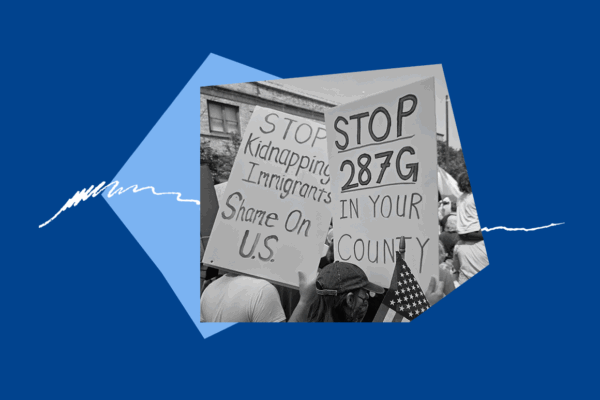
One of the clearest examples is Assembly Bill 24/Senate Bill 57, legislation that would have required Wisconsin sheriffs to assist federal immigration enforcement. The Republican-controlled Legislature passed the bill through both the Senate and the Assembly, and in April 2026, Governor Evers vetoed it.
If the governor had signed the legislation instead, Wisconsin counties would have been required to follow new rules tying local law enforcement to federal immigration enforcement. The governor's veto was the final step that prevented it from becoming law.
Forcing sheriffs to do ICE’s bidding
AB-24/SB-57 would have changed the role of Wisconsin county sheriffs by requiring them to participate in certain federal immigration enforcement functions.
Under the legislation, sheriffs would have been required to request proof of citizenship or immigration status from people booked into the county jail on any felony allegations. If a person's status could not be verified, the sheriff would have been required to provide that information to federal immigration authorities. The legislation also required sheriffs to comply with certain federal immigration detainers and administrative warrants.
The bill imposed a significant financial penalty to coerce counties into compliance. A sheriff who failed to certify compliance could trigger a 15 percent reduction in the county's shared revenue payments from the state. That money helps fund local government services, including public safety and other basic county functions.
That means the choice facing counties would not simply have been whether they wanted to participate in federal immigration enforcement. Refusing to participate could have resulted in the loss of a significant amount of state funding.
The ACLU of Wisconsin opposed AB-24 and SB-57, arguing that the legislation would turn local law enforcement into an extension of federal immigration enforcement and divert local resources toward deportation.
Immigration enforcement and public safety are not the same thing
One of the central questions surrounding legislation like AB 24 is what we expect local law enforcement to actually do.
Sheriffs and their deputies already have a long list of responsibilities. They respond to violent crimes, investigate offenses, transport people in custody, operate county jails and respond to emergencies. Those responsibilities require personnel, time, jail space and taxpayer dollars.
AB-24 would have added federal immigration enforcement to that list.
The concern raised by opponents of the legislation is that involving local law enforcement in immigration enforcement can also change the relationship between police and the communities they serve.
People cooperate with law enforcement when they believe they can report a crime, provide information and seek help without creating unrelated consequences for themselves or their families. When people believe that contact with law enforcement could expose them or someone they know to immigration enforcement, that trust can become much harder to maintain.
This is particularly important in communities with large immigrant populations.
The question is not simply whether someone who commits a crime should be held accountable. The question is whether local law enforcement should become part of a federal immigration enforcement system and whether doing so helps local officers accomplish their primary responsibilities.
The ACLU of Wisconsin and other opponents argued that it does not. We warned that requiring sheriffs to participate in immigration enforcement could make immigrant communities less willing to report crimes or cooperate with investigations.
There is also a basic resource question.
Every hour a deputy spends performing an immigration enforcement function is an hour that deputy is not doing something else. Every dollar spent administering a new state mandate is a dollar that cannot be spent somewhere else. And every person held in a county jail occupies jail capacity that local taxpayers are paying to maintain.
What happens when ICE becomes part of local policing?
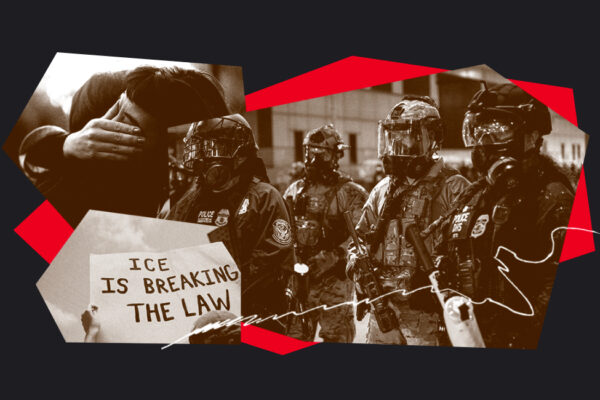
This question has become more significant as federal immigration enforcement has expanded under the Trump administration.
Federal data show that ICE does not exclusively target people convicted of serious or violent crimes. ICE's own statistics distinguish between people with criminal convictions, people with pending criminal charges and people who have neither convictions nor pending charges but are alleged to have violated immigration law.
Independent analysis of ICE detention data found that this distinction is significant. In November 2025, TRAC reported that 47,964 of the 65,135 people in ICE detention had no criminal conviction, or about 74 percent. Cato's analysis of leaked ICE data found that only about 5 percent of detainees had violent criminal convictions.
The popular idea that immigration enforcement is primarily about removing people convicted of violent crimes does not match the available detention data, which is important when deciding whether local law enforcement should be required to assist.
Wisconsin has also watched what has happened when federal immigration enforcement operations have escalated in other Midwestern cities.
In Minneapolis, ICE operations in January 2026 resulted in the deaths of two U.S. citizens, including Renee Nicole Good, a 37-year-old mother of three who was fatally shot by an ICE officer during an immigration enforcement operation.
Those events occurred under federal authority, not because of AB 24. But they illustrate why the question of how closely local governments should become involved in federal immigration enforcement is not theoretical.
Wisconsin's governor has been the final check
The ACLU of Wisconsin is a nonpartisan organization and does not endorse candidates or political parties. The partisan makeup of the Legislature and the governor's office is simply a matter of public record.
During the 2025–26 legislative session, Republicans held the majority in both the Assembly and Senate. Tony Evers, a Democrat, served as governor. That structure meant that legislation could move through a Republican controlled Legislature and still face a Democratic governor's veto.
AB-24 is one example. The Legislature passed the bill. Governor Evers vetoed it. That veto meant the legislation did not become Wisconsin law.
But the issue is unlikely to disappear simply because one bill was vetoed.
Wisconsin's 2026 election will determine who occupies the governor's office beginning in 2027, while every Assembly seat and half of the Senate are also on the ballot. For the first time since 2010, both parties have a realistic path to winning control of both legislative chambers. That means the relationship between the governor and Legislature could look very different during the next legislative session.
The future of bills like AB-24 will depend on what lawmakers introduce, what passes the Legislature and who occupies the governor's office when those bills reach the governor's desk.
For now, Wisconsin remains a state where county sheriffs are not required by AB-24 to perform the immigration enforcement functions that the bill proposed.
That was the result of a legislative vote, followed by a gubernatorial veto.
The next Legislature and the next governor will determine what happens from there.