In 6-3 decisions on June 30, the Supreme Court of the United States issued its ruling in two cases—West Virginia v. B.P.J. and Little v. Hecox—brought by states defending categorical bans on transgender women and girls participating on women’s and girls’ sports teams. The Supreme Court upheld Idaho and West Virginia’s sports bans, holding that while these laws discriminate by biological sex, they do not violate either Title IX or the Equal Protection Clause.
Since 2020, 27 states have banned transgender youth from playing school sports. Many of these bans allow for invasive forms of sex testing that put all women and girls at risk and embolden intrusive challenges to student-athletes' sex.
Wisconsin is protected—for now. Legislation to ban trans women and girls from sports teams consistent with their gender identity have passed the last few sessions, but Governor Evers has thankfully vetoed them.
More Than Sports At Stake
Beyond disgracefully allowing states to bar certain kids from playing sports with their friends, these rulings also set broader anti-trans and anti-women precedents.
Here, SCOTUS narrowed Title IX, a groundbreaking 1972 statute intended to end sex discrimination in education and most famous for its requirement that schools provide girls with equal athletic opportunities.
The majority decision in West Virginia v. B.P.J. written by Justice Brett Kavanaugh argues that Title IX sports protections apply on the basis of biological sex and not gender identity, doubling down on outdated binary essentialism: “the Title IX regulations allowed separate sports teams precisely because of the inherent physical differences between biological men and biological women” (3). This blatantly ignores, at minimum, the scientific reality of biological sex diversity in humans.
The equal education promised by Title IX includes more than sports, and a narrower understanding of this statute leaves a pathway to erode the civil rights of all gender minorities. Not only could this precedent be used to rule against trans students in the future, it harms women and girls.
Limiting important antidiscrimination laws to a binary understanding of sex opens the door for all women and girls—but especially anyone who appears gender non-conforming—to be challenged, subjected to demeaning sex testing, and excluded if they’re deemed not to fit.
Wrong Side of History
Our rights are more than a game. Politicians are using trans kids as scapegoats to gain support for discriminatory policies.
The truth is: trans people, like all people, have varying athletic abilities. SCOTUS kicked this challenge to their black-and-white view back to states and schools: “Particularly in the sports context, determining the effects of the puberty blockers and hormones taken by transgender athletes—and then comparing each of those transgender athletes’ abilities to those of other individual biological males and individual biological females in the relevant sport—would be an almost impossible task for a judge to perform on an equitable basis. The legislatures and the schools are better equipped—and under the Constitution, are the more appropriate entities—to assess the competing medical and scientific considerations and draw appropriate lines” (5).
If our elected officials really cared about fairness in sports, they should be targeting real problems like unequal pay for women athletes or invasive sex verification procedures. There are so many inequities in athletics that need to be addressed, and they have nothing to do with our trans friends, family, and teammates.
It’s clear that these politicians don’t actually care about fairness. They’re using the fear of a misunderstood population to gain and keep power while bad policies raise the cost of living, spread terror in our communities, and involve the U.S. in unpopular wars.
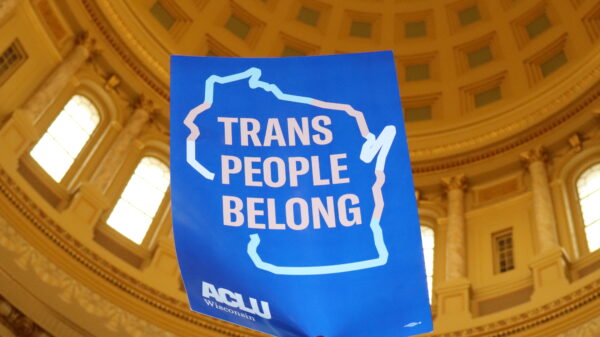
The Supreme Court should never have sided with them. Now, there will be fewer avenues for recourse if a trans sports ban is ever signed into law in Wisconsin. But we will never stop fighting for what we know to be true: trans people belong everywhere in Wisconsin.
The people must serve as the ultimate check on the abuses of our government. Legislators, the Supreme Court—they do not have the last word. We do. We will continue to champion the rights of people under attack, whether it is through litigation, advocacy, or protest for our fundamental rights.