
News & Commentary
May 19, 2016
Letter to Mayor Barrett: Nominating Fire and Police Commissioners
The Police Accountability Workgroup sent the following letter to Mayor Barrett, and copied the Common Council and Fire and Police Commission Board of Directors:
By mcollins
Apr 03, 2016
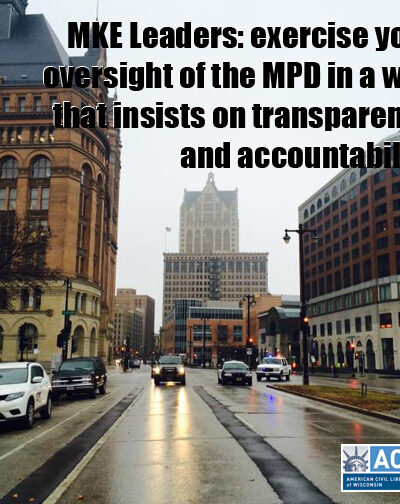
Milwaukee Police Dept Covered Nametags at Protest
Statement from Chris Ahmuty, ACLU of Wisconsin Executive Director:
By mcollins

Feb 17, 2016
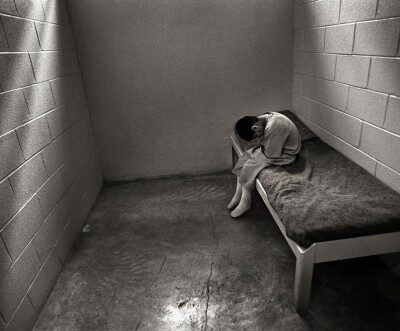
Eliminate Solitary Confinement, Especially of Children
ACLU Calls on Incoming Corrections Secretary Jon Litscher to Eliminate Solitary Confinement, Especially of Children
As Jon Litscher prepares to take the reins as Secretary of the Wisconsin Department of Corrections amid revelations about the abuse of children at Lincoln Hills and Copper Lake juvenile correctional facilities, the ACLU of Wisconsin repeats its call for independent oversight and reform of the Department’s use of solitary confinement, particularly of juveniles. The ACLU also supports Milwaukee County’s efforts to bring young prisoners back to their home communities, but only if they can be appropriately housed and cared for locally.
Recent developments have brought momentum to the cause of curtailing solitary confinement and the “terrible price” it exacts on prisoners. In a concurring opinion in June 2015, U.S. Supreme Court Justice Anthony Kennedy complained that “the conditions in which prisoners have been kept simply has not been a matter of sufficient public inquiry or interest.” He observed that “near-total isolation exacts a terrible price,” and invited a legal challenge to long-term solitary confinement. In late 2015, a group of leaders of state correctional systems, including former Wisconsin DOC secretary Rick Raemisch, and advocates for prisoners made recommendations to end the over-use of isolation in prisons. The recommendations included ensuring that vulnerable populations, including juveniles, be confined in isolated settings only when no alternative exists and then only for a maximum of 15 days. In January 2016, President Obama prohibited solitary confinement of juveniles in federal prisons and adopted other recommendations to limit the use of restrictive housing. These developments coincide with the United Nation’s adoption of the “Nelson Mandela Rules” for the treatment of prisoners, which recognize solitary’s “devastating effect on physical and mental health” and restrict its use to no more than 15 days.
The ACLU has long been concerned about solitary confinement in Wisconsin’s prisons and jails, especially when applied to young people, and called for greater transparency so the public can monitor and deter abuse. In 2010, the ACLU questioned the closing of Ethan Allen School for Boys and Southern Oaks School for Girls, because many of the youth incarcerated there were from the Milwaukee area and would be more isolated from family if moved to the more distant Lincoln Hills and Copper Lake facilities. The ACLU feared the greater distance would make family visits more difficult, interfere with the youths’ rehabilitation, and put them further “out of sight and out of mind.”
In 2012, the ACLU and Human Rights Watch issued a report, “Growing Up Locked Down,” which documented the severe harm solitary confinement causes young people. The report noted that the Wisconsin Department of Corrections refused to allow interviews of children in its custody, and the ACLU called upon “Wisconsin prison and jail officials . . . to be more transparent about how they use solitary confinement on kids.”
In November 2015, the ACLU joined other advocates in calling upon the Department to contract with an independent entity, such as the National Institute of Corrections, to evaluate its solitary practices and policies, report its findings to the public and make recommendations for future improvements.
While the Department under outgoing Secretary Ed Wall made some progress toward reducing the use of solitary confinement, it did not respond to calls for greater oversight and transparency. The DOC’s general lack of transparency with regard to solitary and particularly the isolation of the Lincoln Hills and Copper Lakes facilities from prisoners’ families raise serious concerns about the extent to which juveniles may have been subjected to solitary. Secretary Litscher should seize the opportunity of his appointment to eliminate solitary confinement of juveniles, radically reduce its use among all prisoners, and submit to independent oversight.
By mcollins
Feb 10, 2016
Health Care at Women’s Prison Improved to Meet Terms of Settlement with ACLU
The American Civil Liberties Union and the ACLU of Wisconsin today announced that the State of Wisconsin has satisfied the terms of a settlement agreement requiring fundamental changes to medical and mental health care at the state’s largest women’s prison and that the parties to Flynn v. Walker, the longstanding class-action lawsuit, would file papers seeking court dismissal of the case. The first-of-its-kind class action lawsuit was originally filed in 2006 on behalf of women prisoners at Taycheedah Correctional Institution. The lawsuit charged that the prison system put the lives of women prisoners at risk through grossly deficient health care, provided women mental health treatment far inferior to that provided to men in Wisconsin, and failed to provide reasonable accommodations to allow prisoners with disabilities to access basic prison services.
By mcollins

Jan 21, 2016
Civil Asset Forfeiture Reform Bill Moves Forward in Wisconsin
Police agencies in Wisconsin use civil asset forfeiture laws to seize – and then keep or sell – property they allege is involved in a crime. Even if the owner of the property is innocent or never charged, they may never get their property back. From the moment police seize the property until the courts act, owners are harmed, and may be deprived of their vehicle or the funds they may need to hire an attorney.
By mcollins

Aug 28, 2015
Student Drug Testing Is Intrusive, Unnecessary and Ineffective
Over the past several months, the ACLU of Wisconsin has heard from people concerned about public schools around the state instituting random drug testing of students in sports and extracurricular activities and those who park in school parking lots. For example, schools in Crivitz[1] and Oconomowoc[2] recently joined a national trend in which the proportion of public high schools that randomly tests students grew from 14% in 2006 to 18% in 2012.[3]
By mcollins
Aug 12, 2015
Community Groups to Milwaukee Mayor: Time for Meaningful Police Accountability
A coalition of Milwaukee Community Groups sent the following letter to Milwaukee Mayor Tom Barrett today, asking him to nominate two additional, qualified members to the city's Fire and Police Commission.
By mcollins

Jun 02, 2015
ACLU of Wisconsin Says Madison Police Department Must Change After Numerous Killings
Today, the Madison Police Department announced that Officer Matt Kenny has been exonerated following the internal investigation of his actions in the fatal shooting of Tony Robinson on March 6, 2015. The ACLU of Wisconsin has been following the criminal and internal investigations in the killing. Chris Ahmuty, the executive director of the ACLU of Wisconsin, has made the following statement:
By mcollins
Apr 17, 2015
Recording Police Activity
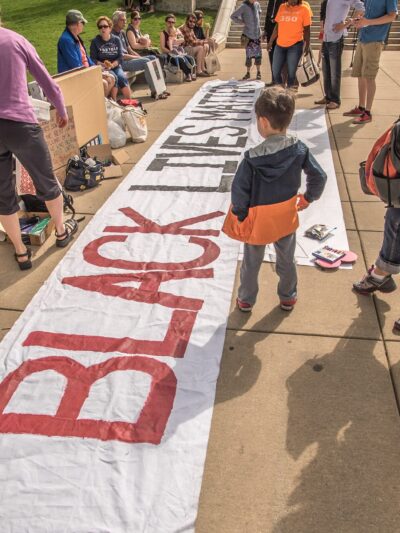
On July 24, 2014, Milwaukee's Fire and Police Commission (FPC) approved Standard Operating Procedure 755: Recording Police Activity. The policy provides guidance to the Milwaukee Police Department for situations in which they are being recorded by members of the public or media, which is a constitutionally-protected activity. This right has been upheld by the Seventh Circuit Court of Appeals as recently as 2012 in ACLU vs. Alvarez, a case in which individuals and organizations that wanted to monitor police activity in order to detect police misconduct were prosecuted under the law.
By mcollins

Stay Informed
Sign up to be the first to hear about how to take action.
By completing this form, I agree to receive occasional emails per the terms of the ACLU’s privacy statement.
By completing this form, I agree to receive occasional emails per the terms of the ACLU’s privacy statement.